


By: Nicholas D'Ovidio, Interim General Manager at The Club at North Halton
We started small. A few meetings where the conversations were honest, a little uncomfortable, and long overdue. We talked about the disconnect, not just with members, but with each other. Not in a dramatic way, but in the quiet gaps you only notice when you step back and really look at how the club is operating day to day.
Nothing was broken. That was not the issue. The issue was that we were not always moving in the same direction at the same time.
Different departments were strong, proud, and capable. But the experience being delivered to members did not always feel like it came from one place. It felt like separate pieces, all well done, but not fully connected.
That was the moment we knew we needed to slow down and be intentional about how we move forward.
We brought in Alena Miatlushka from the Boulevard Club for help. That partnership became one of the most important steps in our journey. She helped us see things clearly, recognize our strengths & weaknesses, and create a foundation that would become the biggest stepping stone toward changing our team's culture.
What came out of those early discussions was not a finished product. It was the start of alignment.
Why we had to change
Like most private clubs, North Halton had built strong departments over time. Golf, curling, food and beverage, turf, facilities, and administration each developed their own standards, rhythms, and pride in execution.
That strength is something we never wanted to lose.
But strength without connection can create inconsistency in the member experience. Not because people are not trying, but because everyone is optimizing within their own space rather than for the experience as a whole.
Members do not experience departments. They experience one visit. One impression. One feeling that either holds together or does not.
That realization became the foundation for how we began to make decisions across the club. It gave us a simple filter for moments where priorities compete, and pressure builds. The question became less about what works for one area and more about what protects the overall experience.
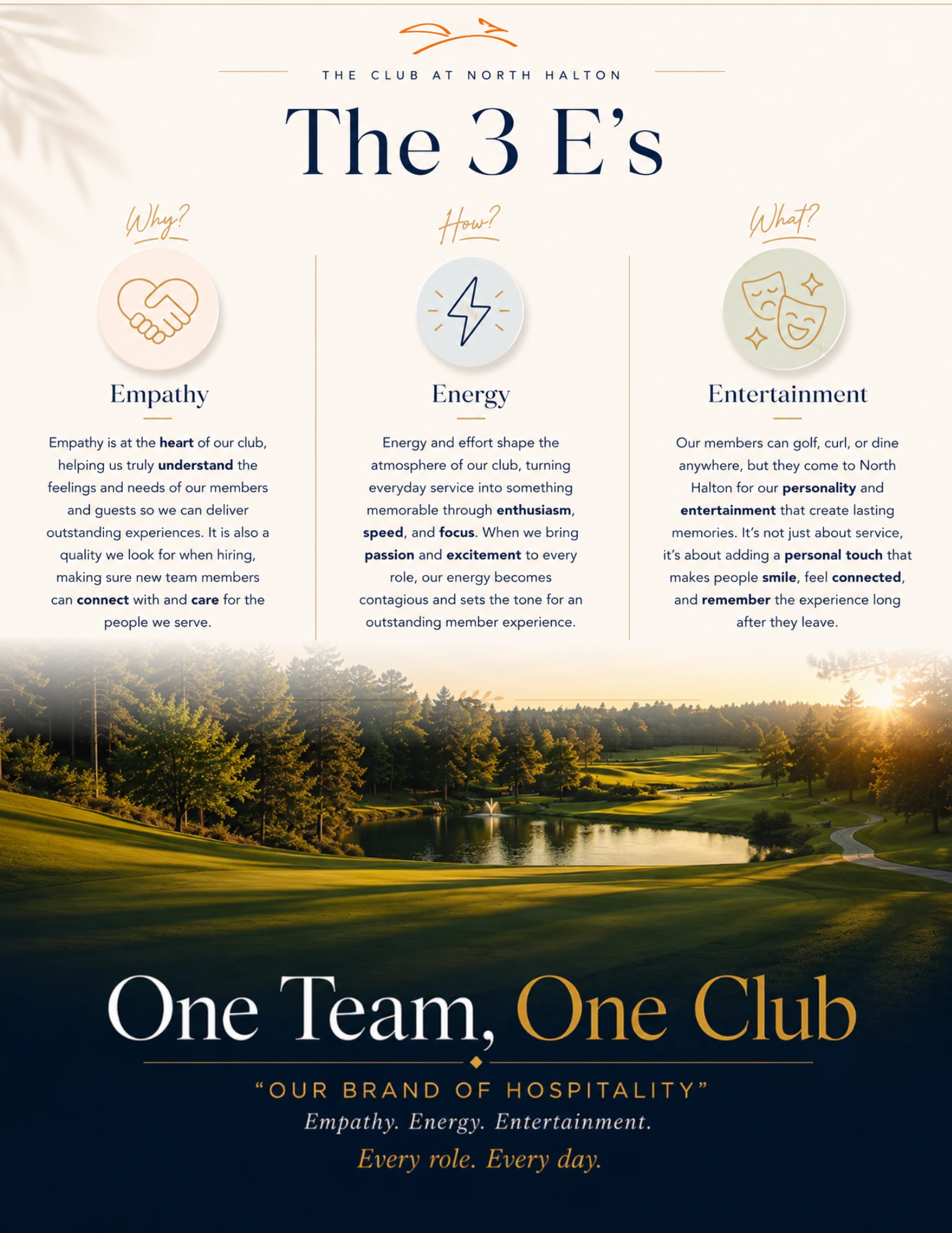
The 3 Es that guide behaviour
We needed something that lived in daily behaviour, not just discussion. A mantra of sorts.
That became the 3 Es. Empathy, Energy, and Entertainment.
Empathy is where we start. It keeps us focused on the member perspective, not just the task. It does not mean every request is agreed to, but it does mean every request is understood.
Energy is what people feel before they hear what we say. It sets tone, it shapes perception, and it often defines whether an interaction feels positive or transactional.
Entertainment is what turns a good experience into a memorable one. It is not about performance in a theatrical sense. It is about hospitality as an experience. A lively patio, a team that engages naturally, moments of personality in service, and an atmosphere that makes people want to stay a little longer.
The 3 Es give us a shared language that is used across every department without needing explanation.
Brand standards that live in reality
A big part of culture work is making it real.
We built brand standards that focus on actual situations, not abstract ideals. What service looks like on a busy patio night. How communication works during delays. How departments support each other when pressure builds. How we recover when something goes wrong.
These are not documents meant to sit in a binder. They are posted for our members to know what to expect, and what we are working to deliver.
Daily reinforcement over formal training
We moved away from the idea that culture is delivered in one session.
Instead, it is reinforced daily through repetition and consistency. Short pre-shift conversations. Manager alignment moments. On the floor coaching. Small corrections in real time when needed.
Over time, this is what builds standards that hold under pressure.
Leadership alignment matters most
None of this works without consistency at the leadership level.
If managers interpret standards differently, the team will too. If expectations shift depending on the day or who is working, the system breaks down quickly.
So we focused heavily on alignment at the leadership level first. Shared language. Shared expectations. Shared accountability. Not rigid, but consistent enough that the team always knows what good looks like.
Where AI fits into the work
As part of how we operate, we have also started using AI as a supporting tool in planning, communication, and documentation.
Not as a replacement for judgment, but as a way to reduce friction in execution and improve clarity across teams.
It helps streamline communication, accelerate planning cycles, and keep documentation consistent. That creates more space for leaders to focus on people and the member experience, rather than administrative load.
Used properly, it strengthens how we operate without changing what we stand for.
What success looks like
We are not measuring success in slogans or visuals.
We are looking for behaviour that shows alignment is working. Fewer gaps between departments. Smoother transitions in the member journey. Faster recovery when something goes wrong. More consistency in tone and service across the club.
Most importantly, we are looking for pride that shows up without being asked for. That quiet confidence in how people carry themselves and support each other.
That is the real indicator that culture is taking hold.
The point of it all
We know culture isn't a project with an end date; it either holds under pressure or falls apart when busy. At North Halton, we are building it to last. It began with small conversations, grew through outside guidance, became structured with shared principles and clear expectations, and now lives through daily behavior, not documents.
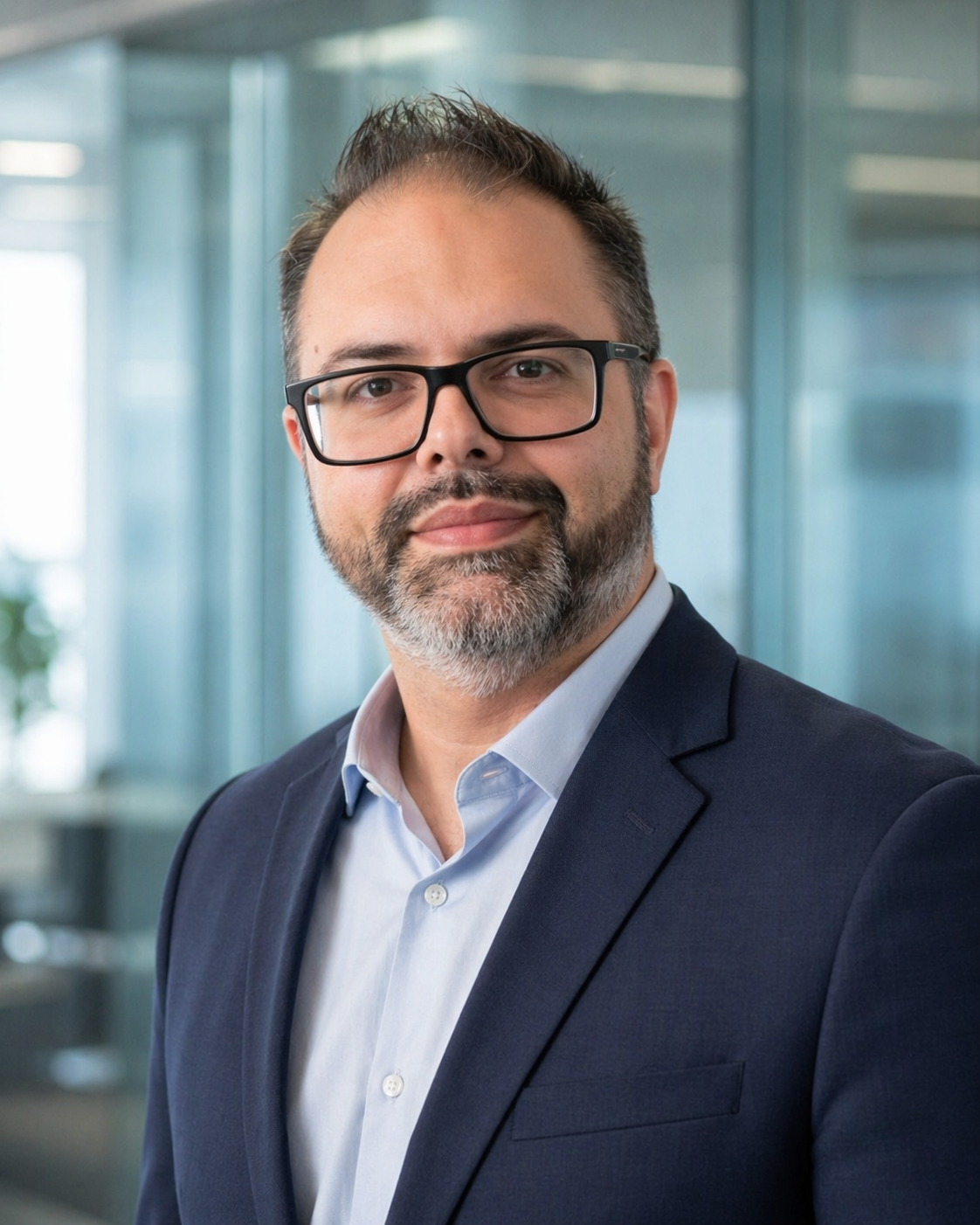
Nick D’Ovidio is the Interim General Manager at The Club at North Halton, where he leads daily operations across multiple departments and plays an active role in member experience, communications, organizational culture, and the Club’s strategic direction. He began his career in food and beverage, with his responsibilities steadily growing into a broad, club-wide leadership role.
Nick serves on the CMAC Ontario Board of Directors and is Vice Chair of the CMAC Member Engagement Committee. He is passionate about developing strong teams, building practical and accountable workplace cultures, and helping clubs evolve while remaining connected to their members and communities.
Contact Info
 | 1401-2045 Lake Shore Blvd. W. Toronto, ON M8V 2Z6 |
 | (416) 878-6066 |
 | admin@cmacontario.com |
About Us
The Ontario Branch of the CMAC has more than 80 clubs, mostly private golf, yacht, athletic and city clubs located in central and southern Ontario between Brantford on the West and Belleville on the East. At over 250 members, it is the largest Branch in CMAC and offers tremendous value for members through professional development, excellent opportunities for networking, promotion of club management as a career, and support through scholarships and donations.
Follow Us!


© Club Management Association of Canada - Ontario Branch. All rights reserved.